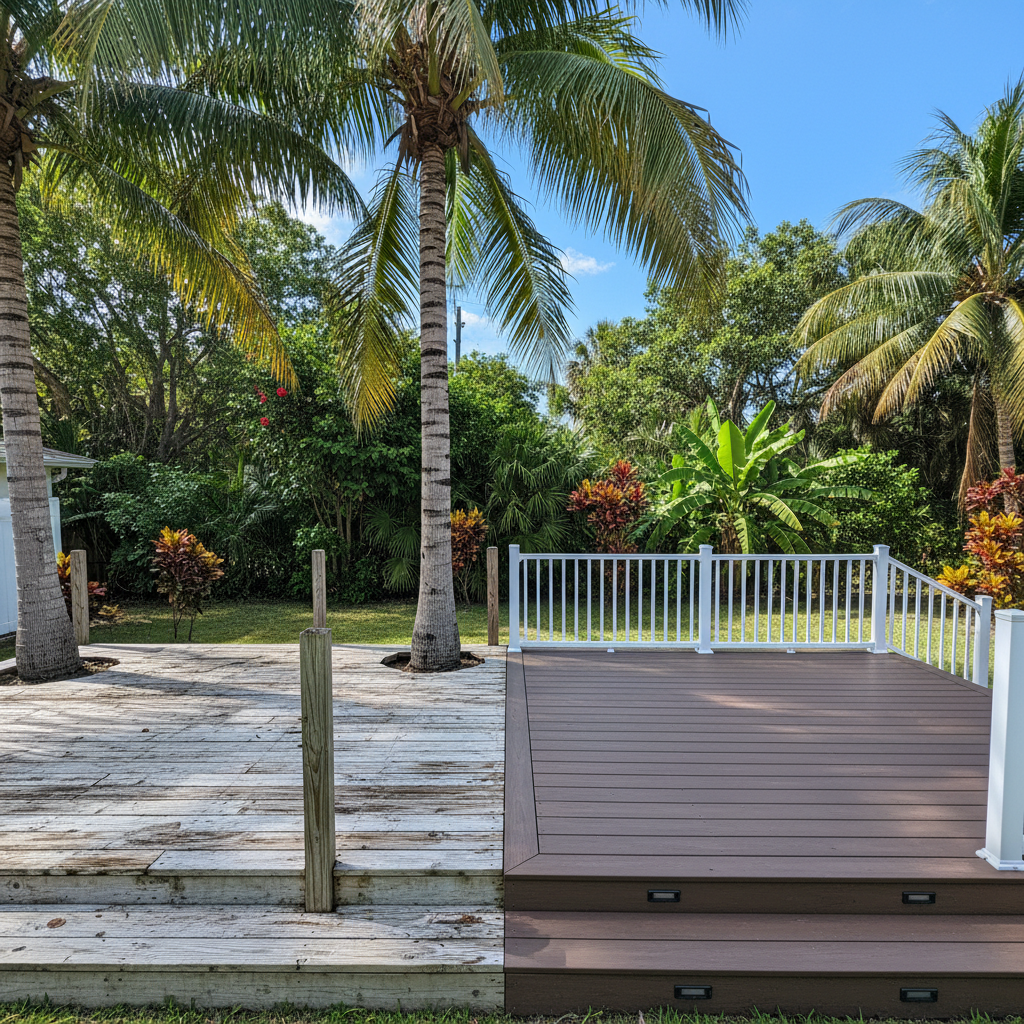
Ever walked onto a backyard deck down here in El Cid or out by Jog Road and noticed it feeling like a skillet under your bare feet? That is the reality of choosing the wrong decking material for South Florida weather. When you are looking at composite options for your outdoor space, you are usually choosing between two main types: capped and uncapped composite boards. All State Decks West Palm Beach breaks down how they actually stack up against our blazing sun and brutal summer downpours.
What is the Real Difference?
Uncapped composite was the early version of this technology. Uncapped composite is a mix of recycled plastic and wood fibers blended all the way through. Because uncapped composite has wood particles exposed on the surface, uncapped composite tends to weather, stain if you spill barbecue sauce on it, and fade when the Palm Beach County sun beats down on it day after day.
Capped composite takes that same tough core and wraps it in a high-performance plastic shell on three or four sides. Think of it like a protective shield. That outer layer guards the wood fibers inside from moisture, mold, and UV rays.
Cost and Upfront Investment
Let us talk numbers because nobody likes surprises when they are budgeting for a home improvement project. Uncapped boards cost less upfront. If you are trying to keep initial material costs down, it is tempting to go that route. But All State Decks West Palm Beach tells homeowners looking to save a buck that saving money on day one often means spending it later.
Capped composite carries a higher price tag. You are paying for that extra manufacturing step and the armor layer on the outside. However, since capped composite does not need sealing or specialized stain treatments to keep it from looking ragged, the lifecycle cost evens out faster than you might think.
Durability in South Florida Weather
We live in a humid subtropical climate. We get intense UV radiation for most of the year, followed by torrential afternoon thunderstorms all summer long. This creates a breeding ground for mold and mildew, especially on shady ground-level decks or right up against backyard pools.
- Uncapped boards absorb moisture over time, leading to swelling, warping, and unsightly mold spots that can be tough to scrub out.
- Capped boards shed water very easily. That plastic shell keeps the humidity out of the core entirely.
- Fading is another big issue here. Uncapped boards will lose their rich color within 2 to 3 seasons under our intense sky. Quality capped boards feature heavy-duty UV inhibitors right in that outer shell to lock the color in.
Maintenance Realities
Nobody wants to spend their weekends scrubbing mold or dragging a pressure washer across their backyard. Uncapped composite requires regular cleaning with specific deck cleaners to keep mildew at bay. If you get a grease stain from the grill, it can penetrate deep into the exposed wood fibers and stay there forever.
Capped composite is a different story. Because the surface is non-porous, most spills wipe right off with some soap and water. You will not be breaking your back trying to lift stubborn stains or worrying about rotting boards underneath.
Our Recommendation for West Palm Beach
If you are building a Deck in West Palm Beach that needs to withstand our brutal local climate without turning into a maintenance chore, All State Decks West Palm Beach recommends capped composite. The extra upfront cost is completely worth it when you consider how well it handles the humidity and UV exposure we deal with every single day. Save the uncapped stuff for drier climates. For homes and businesses in West Palm Beach, All State Decks West Palm Beach provides Deck Construction services.